

Ceiling Bulging With Water?
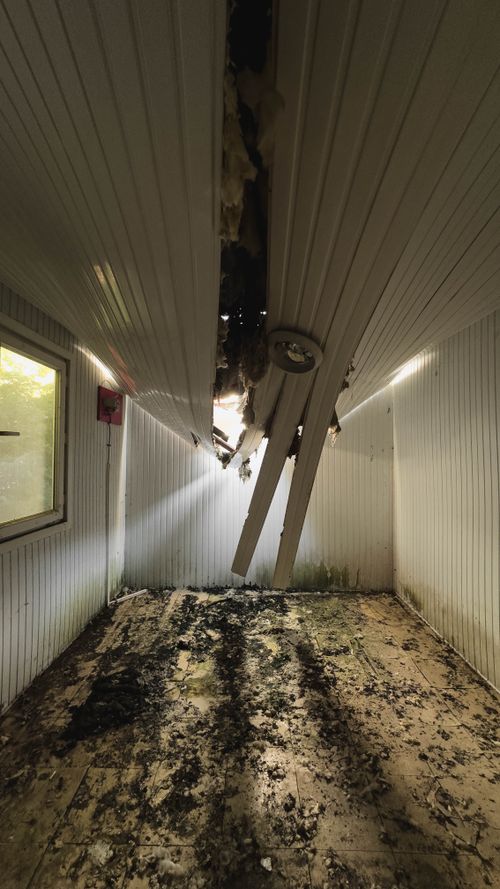
A bulge means water is pooling on top of the drywall, and wet drywall can give way without warning. Do these now:
- Keep people and pets out from under it.
- Move furniture and electronics out of the way and put a bucket or tarp below.
- Switch off the breaker for any light or fan in that ceiling.
- Shut off the water source if you know it: the AC at the thermostat, or the main water valve if a pipe is leaking.
- Call us. For the step-by-step on safely draining the water, see what to do when water is coming through the ceiling.
Brown Stain on the Ceiling: What It Means
The stain's location usually points to the source:
| Where the stain is | Most likely source in a Cape Coral home |
|---|---|
| Near the AC closet or under the attic air handler | Clogged condensate line or overflowing drain pan; see AC leak water damage |
| Around an AC supply vent | Ductwork sweating in a hot attic, dripping onto the drywall |
| Along an exterior wall after rain | Roof edge, flashing or soffit letting wind-driven rain in |
| Middle of a room after a storm | Roof damage or a lifted tile or shingle; see roof leak water damage |
| Under an attic water line or near a bathroom | A leaking supply line or fitting in the attic, common in repiped homes |
| In a condo, any room | The unit above; see condo leaks from the unit above |
An old stain can be dry while a new leak is active a few feet away. A moisture meter and a thermal camera tell us which is which, so you do not paint over a leak that is still running.
Can a Water Damaged Ceiling Be Repaired?
| What you see | Usually |
|---|---|
| Firm ceiling, small stain, caught quickly | Dried in place, stain sealed with a stain-blocking primer, then painted |
| Soft, sagging or crumbling drywall | That section is cut out after drying and replaced |
| Wet attic insulation above | Insulation removed or dried so it does not keep the ceiling wet |
| Visible mold on the ceiling or in the attic | Mold handled by a qualified mold professional; see mold after water damage |
| Textured or popcorn ceiling in an older home | Tested before it is disturbed, because older textures can contain asbestos |
That last row matters in Cape Coral, where many homes date from the 1970s and 1980s. Do not scrape or sand an old textured ceiling until it has been tested.
How We Handle Ceiling Water Damage
- Stop the source. We help you shut off the AC or water and tell you whether you need an HVAC tech, plumber or roofer.
- Protect the room below with plastic, and move contents out of the drip zone.
- Release trapped water safely from a bulging ceiling into containers, so it does not collapse.
- Check the attic. We measure the insulation, framing and drywall from above with moisture meters and a thermal camera.
- Remove what cannot be saved: soaked insulation and soft or sagging drywall.
- Dry the ceiling, attic space and room below with dehumidifiers and air movers, with readings every day. See structural drying.
- Document and hand off repairs once everything reads dry: new drywall where needed, stain-blocking primer and paint.
Why Ceiling Stains Keep Coming Back
- The source was never fixed. A drain line that clogged once will clog again without maintenance.
- The stain was painted with regular paint. Water stains bleed through ordinary paint; they need a stain-blocking primer first.
- The insulation above stayed wet and kept feeding moisture into the drywall.
- Ducts sweat every summer. Uninsulated or damaged attic ductwork condenses water on humid days until the duct insulation is repaired.
What Ceiling Water Damage Costs
A small stain caught early may only need drying, primer and paint. A ceiling that has to be cut out, with wet insulation replaced, costs more. Nationally, most water damage restoration jobs fall between $1,300 and $6,000. You get a written estimate before work beyond emergency water removal. See ceiling and room cleanup costs.
Is Ceiling Water Damage Covered by Insurance?
Sudden damage, such as an AC overflow, a burst attic line or storm damage to the roof, is often covered. Slow leaks, condensation from ducts and wear on an old roof are often excluded. Take photos before anything is removed. We provide photos and daily moisture readings for your adjuster. See help documenting ceiling damage. This is general information, not insurance advice.
Ceiling Water Damage Questions
My ceiling is bulging with water. What do I do?
Keep everyone out from under it, move belongings, switch off power to fixtures in that ceiling, shut off the water source if you know it, and call (239) 356-5803.
What does a brown stain on the ceiling mean?
Water reached the drywall from above, from an AC unit, attic pipe, sweating duct, roof or the unit upstairs. A moisture meter shows whether it is still wet.
Can a water damaged ceiling be repaired?
Usually. Firm drywall can be dried, sealed with stain-blocking primer and painted. Soft or sagging sections are cut out and replaced after drying.
Who do I call for a ceiling leak?
Call us at (239) 356-5803 to dry the ceiling and attic, plus the trade that fixes the source: an HVAC technician, plumber or roofer. We tell you which one you need.
Is it safe to stay in a room with a wet ceiling?
Not under a sagging or dripping section. A firm, dry stain is not an immediate danger, but it should be checked for an active leak.
Water in Your Ceiling?
Call (239) 356-5803. We answer 24/7 for ceiling water damage across Cape Coral, plus North Fort Myers and Fort Myers. Because so many homes here keep the air handler and plumbing overhead, our Cape Coral water damage specialists check the attic on every ceiling job.